
Safe period calculator
Safe period calculator, Discover how to use a safe period calculator for natural contraception. Learn about fertility tracking, cycle awareness, and natural family planning methods.
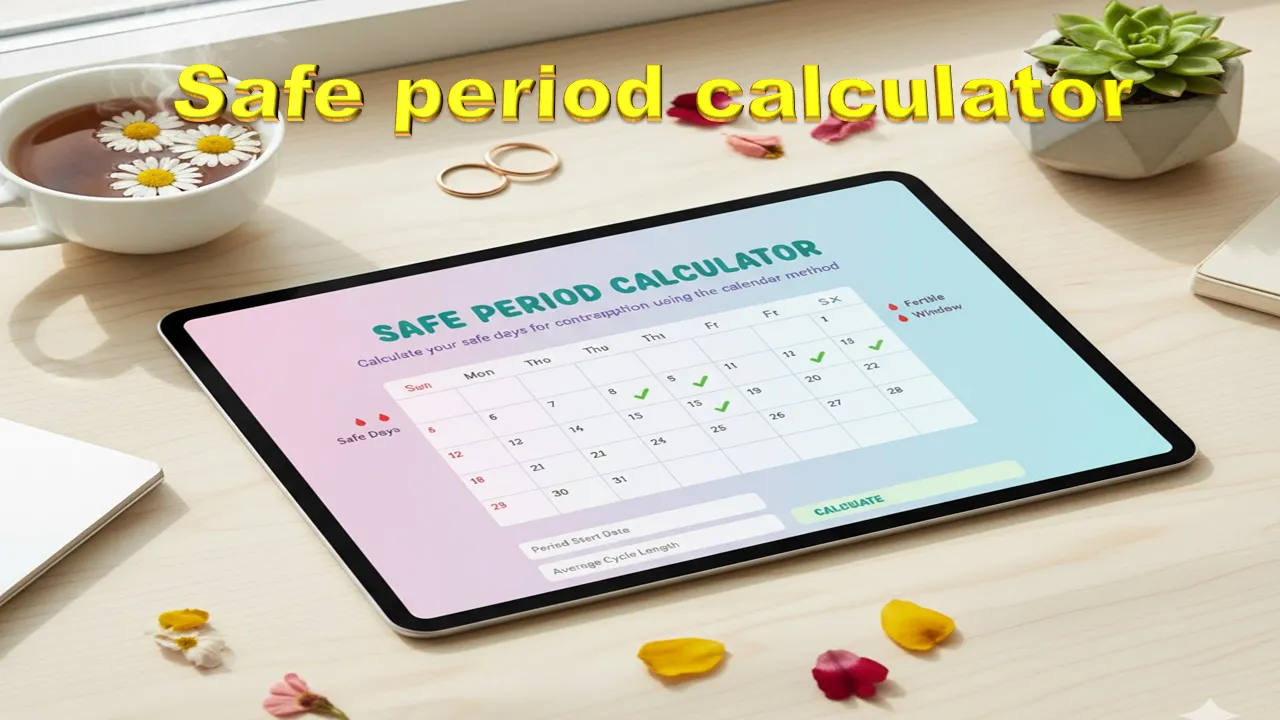
Safe Period Calculator
Calculate your safe days for contraception using the calendar method
Your Safe Period Calculation
Next Period
–
Ovulation Date
–
Fertile Window
–
Safe Period
–
Fertile Period (Unsafe)
–
Monthly Calendar
Disclaimer: This calculator provides estimates based on the calendar method and should not be used as the sole method of contraception. The safe period method is not 100% reliable. Always consult with a healthcare provider for personalized advice.
Safe Period Calculator: The Ultimate Guide to Natural Contraception
Navigating family planning can feel overwhelming with countless options available. But what if you could understand your body's natural rhythms to make informed decisions? Enter the safe period calculator – a powerful tool that helps you identify your fertile and non-fertile days using the calendar method. This comprehensive guide will walk you through everything you need to know about safe period calculation, from basic principles to advanced tracking techniques.
What is a Safe Period Calculator?
A safe period calculator is a digital tool that helps women identify days in their menstrual cycle when pregnancy is less likely to occur. Based on the rhythm method, it calculates your fertile window using key information about your menstrual cycle.
The concept revolves around understanding that women are only fertile for about 5-7 days each cycle. By tracking your cycle patterns, you can identify these fertile days and either avoid intercourse during this window or use additional protection.
How Does a Safe Period Calculator Work?
The calculator uses three primary data points:
- First day of your last menstrual period
- Average length of your menstrual cycle
- Typical duration of your period
Using this information, the calculator applies standard fertility principles to estimate:
- Your next expected period
- Your ovulation date
- Your fertile window
- Your "safe" days for intercourse
The Science Behind Menstrual Cycle Tracking
Understanding your menstrual cycle is fundamental to using a safe period calculator effectively. The average menstrual cycle lasts 28 days, but normal cycles can range from 21 to 35 days.
The Three Phases of Your Menstrual Cycle
Menstrual Phase (Days 1-5)
This phase begins on the first day of your period. The uterine lining sheds, and hormone levels are at their lowest. Pregnancy is highly unlikely during this phase.
Follicular Phase (Days 1-13)
Overlapping with the menstrual phase, this period involves the pituitary gland releasing follicle-stimulating hormone (FSH), which stimulates egg development in the ovaries.
Ovulation Phase (Day 14)
Typically occurring around day 14 in a 28-day cycle, a surge in luteinizing hormone (LH) triggers the release of a mature egg from the ovary. This is when you're most fertile.
Luteal Phase (Days 15-28)
After ovulation, the empty follicle transforms into the corpus luteum, which produces progesterone to prepare the uterine lining for potential pregnancy.
Benefits of Using a Safe Period Calculator
Natural and Non-Invasive
Unlike hormonal contraceptives that introduce synthetic hormones into your system, the calendar method works with your body's natural rhythms. There are no side effects, no medications, and no medical procedures involved.
Increased Body Awareness
Regular use of a safe period calculator encourages you to become more attuned to your body's signals and patterns. This awareness can help you recognize changes in your cycle that might indicate health issues.
Cost-Effective Family Planning
Most safe period calculators are available for free online, making this one of the most affordable family planning methods available. There are no recurring costs for pills, devices, or medical appointments.
Ethical and Religious Acceptance
For individuals whose religious or ethical beliefs prohibit artificial contraception, natural family planning methods like the calendar method provide an acceptable alternative.
How to Use a Safe Period Calculator Effectively
Step 1: Gather Accurate Cycle Data
Before using any calculator, track your menstrual cycles for at least 3-6 months. Note the first day of each period and count the days between them to determine your average cycle length.
Step 2: Input Your Information Correctly
When using our safe period calculator at PregnancyCalculators.online, you'll need to provide:
- The exact date your last period started
- Your average cycle length (number of days from day 1 of your period to day 1 of your next period)
- Your typical period duration
Step 3: Understand Your Results
The calculator will provide you with:
- Your next expected period date
- Your estimated ovulation day
- Your fertile window (typically 5 days before ovulation through 1 day after)
- Your safe periods before and after the fertile window
Step 4: Implement Additional Tracking Methods
For increased accuracy, combine the calendar method with:
- Basal body temperature tracking
- Cervical mucus observations
- Ovulation predictor kits
Limitations and Considerations of the Calendar Method
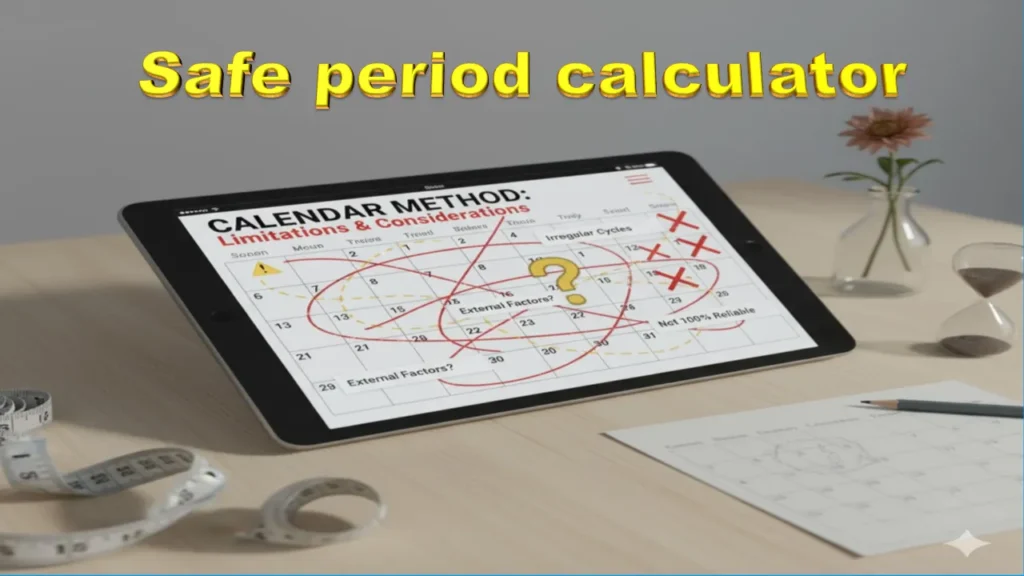
While safe period calculators provide valuable insights, they're not foolproof. Understanding their limitations is crucial for effective family planning.
Irregular Cycles Challenge Accuracy
Women with irregular menstrual cycles may find the calendar method less reliable. Cycle variations of more than 8 days can significantly impact calculation accuracy.
Not Protection Against STIs
The calendar method offers no protection against sexually transmitted infections. If STI prevention is a concern, barrier methods like condoms should be used regardless of where you are in your cycle.
Lower Effectiveness Than Other Methods
According to the CDC, the calendar method has a typical use failure rate of 24%, meaning 24 out of 100 women using this method for a year will become pregnant. This compares to less than 1% for IUDs and implants.
Life Factors That Affect Cycle Regularity
Stress, illness, travel, weight changes, and certain medications can all disrupt your menstrual cycle, making predictions less reliable.
Enhancing Calendar Method Accuracy with Additional Techniques
Basal Body Temperature (BBT) Tracking
Your basal body temperature—your temperature at complete rest—slightly increases after ovulation. By tracking your BBT daily with a special thermometer, you can confirm that ovulation has occurred.
Cervical Mucus Method
The appearance and consistency of your cervical mucus changes throughout your cycle. Around ovulation, it typically becomes clear, slippery, and stretchy—similar to raw egg whites.
Symptothermal Method
This approach combines multiple fertility awareness methods, typically including calendar calculations, BBT tracking, and cervical mucus observations for maximum accuracy.
Ovulation Predictor Kits
These kits detect the luteinizing hormone (LH) surge that occurs 24-36 hours before ovulation, providing a more precise indication of your fertile window.
Common Mistakes to Avoid When Using a Safe Period Calculator
Relying on Too Little Data
Making decisions based on just one or two cycles of data significantly reduces accuracy. Track for several months before relying on the patterns.
Ignoring Cycle Irregularities
If your cycles vary significantly in length, the standard calendar method may not be reliable for you. Consider alternative natural family planning methods.
Misidentifying the First Day of Your Cycle
The first day of your menstrual cycle is the first day of full bleeding—not spotting. Marking this incorrectly throws off all subsequent calculations.
Assuming Universal Fertility Patterns
Every woman's body is unique. While general guidelines exist, your personal fertile window might differ from the standard calculation.
Digital Tools vs. Traditional Charting
Advantages of Digital Calculators
- Quick and easy calculations
- Visual representations of your cycle
- Reminders and notifications
- Data storage for multiple cycles
- Accessibility across devices
Benefits of Paper Charting
- No technology required
- Complete privacy
- Tangible record
- Customizable tracking categories
- No concerns about data breaches
Finding the Right Approach for You
Many women find a hybrid approach works best—using digital tools for convenience while maintaining paper records as backup or for more detailed observations.
Special Considerations for Different Life Stages
Adolescence and Early Reproductive Years
Teenagers and women in their early reproductive years often have more irregular cycles, making calendar methods less reliable. Additional tracking methods are particularly important during this life stage.
Perimenopause Transition
During the years leading up to menopause, cycles often become irregular again. Women in perimenopause may need to adjust their family planning approach as their cycle patterns change.
Postpartum and Breastfeeding
Menstrual cycles typically don't resume immediately after childbirth, especially if you're exclusively breastfeeding. However, ovulation can occur before your first postpartum period, so alternative contraception is usually recommended.
FAQs About Safe Period Calculators
What is the safe period calculator accuracy rate?
The calendar method alone is about 76% effective with typical use. When combined with additional fertility awareness methods, effectiveness can increase to 85-95%.
Can I use a safe period calculator if my cycles are irregular?
While you can use it, the accuracy will be significantly reduced. Women with irregular cycles should consider supplementing with other fertility awareness methods or choosing a different contraceptive approach.
How many days after my period is safe?
This depends on your cycle length. Generally, days 1-7 of a 28-day cycle are considered less fertile, but this varies based on individual cycle characteristics.
Can I get pregnant during my safe period?
While less likely, pregnancy is still possible during supposed "safe" days because sperm can survive in the female reproductive tract for up to 5 days, and ovulation timing can vary.
Is the safe period method approved by medical professionals?
Most healthcare providers acknowledge natural family planning methods but emphasize that they're less effective than other contraceptives. They typically recommend combining multiple fertility awareness methods for better accuracy.
How does breastfeeding affect safe period calculations?
Breastfeeding can suppress ovulation, especially in the first six months with exclusive, frequent nursing. However, since ovulation can resume unpredictably, the calendar method alone isn't reliable during this time.
Can stress affect my safe period calculations?
Yes, stress can delay ovulation, making calendar predictions inaccurate. During stressful periods, it's wise to use backup contraception or abstain if avoiding pregnancy is important.
Conclusion
Understanding and using a safe period calculator effectively requires commitment, consistency, and a willingness to learn about your body's unique patterns. While not the most reliable method of contraception on its own, when combined with other fertility awareness techniques, it can be a valuable component of your family planning toolkit.
Remember that every woman's body is different, and what works for one person may not work for another. The key to successful natural family planning lies in personalized observation, ongoing education, and honest assessment of whether this method aligns with your pregnancy prevention needs.
Ready to take control of your reproductive health? Try our safe period calculator at PregnancyCalculators.online and start tracking your cycle today. Have questions or experiences to share? Leave a comment below—we'd love to hear from you!
| # 🌟 Summary Pregnancy Calculators tools | |
| Category | Purpose |
| Pregnancy Calculators | Track pregnancy weeks, months, and milestones |
| Due Date & Delivery Calculators | Estimate EDD and delivery timelines |
| Conception & Gestation Calculators | Find conception and gestational age |
| Ovulation & Fertility Calculators | Identify fertile windows and ovulation dates |
| Menstrual & Period Calculators | Predict and track menstrual cycles |
| Safe Days & Fertility Protection | Calculate non-fertile (safe) days |
| Implantation & Pregnancy Testing Tools | Estimate implantation and test accuracy |
| Hostinger Web hosting | |
