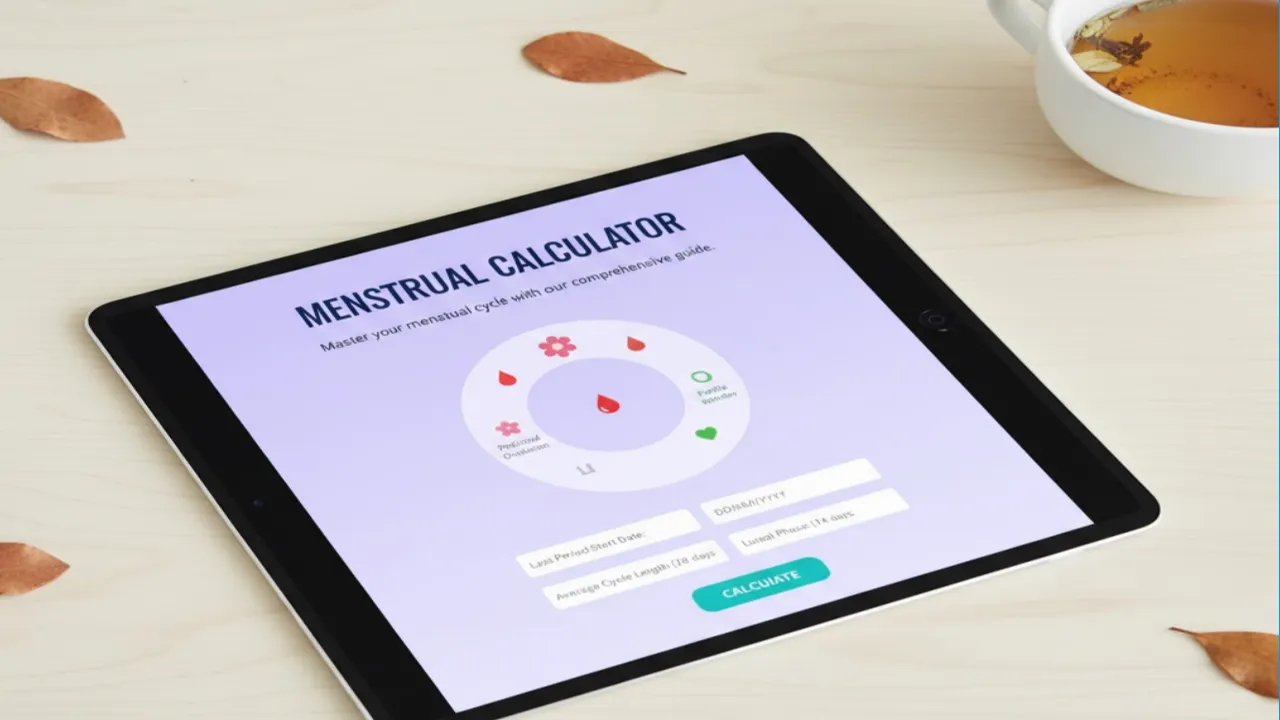
Menstrual calculator
Menstrual calculator, Master your menstrual cycle with our comprehensive guide to menstrual calculators.
Menstrual Cycle Calculator
Your Cycle Overview
Understanding Your Menstrual Cycle
Menstrual Phase (Days 1-5)
The menstrual phase marks the beginning of your cycle when you have your period. The uterus sheds its lining, resulting in menstrual bleeding.
Follicular Phase (Days 1-13)
This phase overlaps with the menstrual phase. Your pituitary gland releases follicle-stimulating hormone (FSH), which stimulates the ovaries to produce follicles.
Ovulation Phase (Day 14)
A surge in luteinizing hormone (LH) causes the ovary to release a mature egg. This is your most fertile period, typically occurring around day 14 of a 28-day cycle.
Luteal Phase (Days 15-28)
After ovulation, the follicle transforms into the corpus luteum, which releases progesterone. If pregnancy doesn’t occur, hormone levels drop, leading to menstruation.
Menstrual Calculator: Your Ultimate Guide to Cycle Tracking and Fertility
Master your menstrual cycle with our comprehensive guide to menstrual calculators. Track fertility, predict periods, and optimize reproductive health. Get started today!
Menstrual Calculator: The Ultimate Guide to Cycle Tracking and Fertility
In today’s digital age, understanding your menstrual cycle has never been easier, thanks to menstrual calculators. These powerful tools transform complex cycle tracking into simple, actionable insights. Whether you’re trying to conceive, avoid pregnancy, or simply understand your body better, a menstrual calculator can be your greatest ally in reproductive health management.
What is a Menstrual Calculator?
A menstrual calculator is a digital tool that helps predict your menstrual cycle patterns, fertile window, ovulation dates, and next period. By inputting basic information about your cycle, these calculators use algorithms to forecast your reproductive timeline with remarkable accuracy.
Modern menstrual calculators have evolved from simple period predictors to comprehensive reproductive health companions. They track symptoms, mood changes, physical signs, and provide personalized insights about your unique cycle patterns.
How Menstrual Calculators Work
Menstrual calculators operate on established reproductive science principles. They typically require:
- Your last period start date
- Average cycle length
- Period duration
- Optional symptom tracking
The calculator then applies statistical models to predict your future cycle events. Most calculators assume a standard luteal phase (time between ovulation and next period) of 14 days, though advanced tools adjust this based on your historical data.
Why Every Woman Needs a Menstrual Calculator
Understanding your menstrual cycle is crucial for multiple aspects of health and life planning. Here’s why incorporating a menstrual calculator into your routine can be transformative:
Empowerment Through Knowledge
When you understand your cycle patterns, you take control of your reproductive health. You can anticipate physical and emotional changes, plan important events around your cycle, and make informed decisions about contraception or conception.
Fertility Awareness
For women trying to conceive, menstrual calculators identify your fertile window with precision. Research shows that timing intercourse during the six-day fertile period dramatically increases conception chances.
Health Monitoring
Regular cycle tracking can reveal underlying health issues. Irregular patterns, unusually heavy bleeding, or persistent symptoms may indicate conditions like PCOS, thyroid disorders, or endometriosis that require medical attention.
How to Use a Menstrual Calculator Effectively
Maximizing the benefits of menstrual calculators requires proper usage and consistent tracking. Follow these steps for optimal results:
Step 1: Gather Your Cycle Data
Before using any calculator, collect at least three months of cycle data. Note:
- Start dates of each period
- Period duration
- Physical symptoms
- Emotional changes
- Basal body temperature (if tracking)
Step 2: Choose the Right Calculator
Select a calculator that matches your needs. Basic calculators work for period prediction, while advanced tools offer fertility tracking, symptom logging, and data analysis.
Step 3: Input Accurate Information
The accuracy of predictions depends entirely on the quality of input data. Be precise about:
- First day of your last period
- Your average cycle length
- Any relevant health conditions
- Current medications
Step 4: Track and Adjust
Use the calculator consistently for 3-6 months. Compare predictions with actual cycle events and adjust your inputs as needed. Remember that stress, illness, travel, and lifestyle changes can affect cycle regularity.
Understanding Your Menstrual Cycle Phases
To fully benefit from menstrual calculator insights, understanding the four key phases of your cycle is essential:
Menstrual Phase (Days 1-5)
The menstrual phase marks the beginning of your cycle, characterized by period bleeding. During this phase, the uterus sheds its lining, and hormone levels are at their lowest.
What to expect:
- Period bleeding for 3-7 days
- Possible cramps, fatigue, and mood changes
- Lower energy levels
Follicular Phase (Days 1-13)
Overlapping with the menstrual phase, the follicular phase begins on day one and continues until ovulation. The pituitary gland releases FSH, stimulating follicle development in the ovaries.
Key characteristics:
- Rising estrogen levels
- Increased energy and optimism
- Cervical fluid changes from dry to creamy
Ovulation Phase (Day 14)
Ovulation occurs when a mature egg is released from the ovary, typically around day 14 of a 28-day cycle. This is your most fertile period.
Ovulation signs:
- Fertile, egg-white cervical mucus
- Mild abdominal pain (mittelschmerz)
- Slight basal body temperature dip followed by rise
- Increased libido
Luteal Phase (Days 15-28)
After ovulation, the ruptured follicle transforms into the corpus luteum, producing progesterone to prepare the uterine lining for potential pregnancy.
Luteal phase features:
- Rising then falling hormone levels
- Premenstrual symptoms in the later stage
- Consistent elevated basal body temperature
Advanced Cycle Tracking Methods
While basic menstrual calculators provide valuable predictions, combining them with additional tracking methods enhances accuracy significantly:
Basal Body Temperature (BBT) Tracking
Tracking your waking temperature reveals ovulation patterns. A sustained temperature rise of 0.5-1°F indicates ovulation has occurred.
Cervical Mucus Monitoring
Observing changes in cervical mucus consistency helps identify fertile days. Fertile mucus is clear, stretchy, and resembles raw egg whites.
Cervical Position Changes
The cervix moves higher, becomes softer, and opens slightly during fertile periods, providing additional ovulation confirmation.
Ovulation Predictor Kits (OPKs)
These test strips detect the luteinizing hormone (LH) surge that precedes ovulation by 24-36 hours, offering precise fertility timing.
Common Menstrual Calculator Mistakes to Avoid
Even with advanced tools, users often make these common errors that compromise accuracy:
Inconsistent Data Entry
Sporadic tracking or inaccurate date recording leads to unreliable predictions. Establish a daily tracking routine for best results.
Ignoring Cycle Irregularities
Assuming a perfect 28-day cycle when yours naturally varies creates prediction errors. Always use your personal average cycle length.
Overlooking Secondary Signs
Relying solely on calculator predictions without noting physical symptoms misses important cycle clues that enhance accuracy.
Not Accounting for Lifestyle Factors
Stress, travel, illness, and significant weight changes can alter cycle timing. Note these events in your tracking for better context.
Benefits Beyond Period Prediction
Modern menstrual calculators offer advantages that extend far beyond simply predicting your next period:
Natural Birth Control
For women practicing fertility awareness methods (FAM), menstrual calculators combined with symptom tracking provide effective natural contraception when used correctly.
Health Issue Detection
Consistent tracking can reveal patterns suggesting health concerns like:
- PCOS (irregular, infrequent periods)
- Thyroid disorders (cycle length changes)
- Endometriosis (severe pain, heavy bleeding)
- Premature ovarian insufficiency (missed periods)
Sports and Performance Optimization
Female athletes can plan training intensity around cycle phases, potentially enhancing performance and reducing injury risk.
Mental Health Management
Understanding hormonal influences on mood helps anticipate and manage PMS, anxiety, and depression symptoms more effectively.
Choosing the Right Menstrual Calculator
With numerous options available, selecting the best menstrual calculator depends on your specific needs:
Basic Online Calculators
Ideal for occasional use, these free tools provide quick period predictions without registration or data storage.
Mobile Applications
Comprehensive period tracking apps offer:
- Cycle history storage
- Symptom logging
- Customizable reminders
- Data export capabilities
- Community features
Specialized Fertility Trackers
For conception-focused users, these advanced tools integrate BBT tracking, OPK results, and medical data for precise fertility window identification.
Medical-Grade Platforms
Some healthcare providers offer connected platforms that sync with electronic health records, enabling physician monitoring of cycle concerns.
The Science Behind Cycle Prediction Algorithms
Understanding how menstrual calculators generate predictions enhances their effective use:
Statistical Modeling
Most calculators use moving averages of your previous cycles to forecast future ones. The more data entered, the more personalized predictions become.
Machine Learning Applications
Advanced calculators employ machine learning to identify individual patterns and improve predictions over time based on your unique cycle characteristics.
Integration of Multiple Data Points
Sophisticated tools combine period dates with symptoms, BBT, cervical mucus, and lifestyle factors for comprehensive analysis and improved accuracy.
Menstrual Calculators and Reproductive Health Conditions
Certain health conditions significantly impact menstrual cycles, requiring specialized tracking approaches:
PCOS and Irregular Cycles
Women with PCOS often experience irregular, infrequent periods. Menstrual calculators can help identify patterns and track treatment effectiveness.
Thyroid Disorders
Both hypothyroidism and hyperthyroidism affect cycle regularity. Tracking can reveal improvements with proper treatment.
Perimenopause Transition
During the menopausal transition, cycles become increasingly irregular. Detailed tracking provides valuable information for healthcare discussions.
Endometriosis and Symptom Patterns
Tracking pain patterns, bleeding intensity, and other symptoms helps manage endometriosis and evaluate treatment options.
FAQs About Menstrual Calculators
How accurate are menstrual calculators?
Menstrual calculators are generally accurate for women with regular cycles, typically predicting periods within 1-3 days. Accuracy improves with consistent tracking and increases over time as the algorithm learns your unique patterns.
Can I use a menstrual calculator for birth control?
While menstrual calculators can support fertility awareness methods, they shouldn’t be used as sole contraception without proper training and multiple confirmation methods. Always consult a healthcare provider for contraceptive guidance.
How long should I track before predictions become reliable?
Most calculators need 3-6 cycles of consistent data for reliable predictions. The more historical data you provide, the more accurate future forecasts become.
Do menstrual calculators work for irregular cycles?
Yes, but predictions may be less precise. Women with irregular cycles benefit from tracking additional fertility signs like BBT and cervical mucus for better accuracy.
Are period tracking apps safe and private?
Reputable apps use encryption and clear privacy policies. Always review privacy settings and avoid sharing more information than necessary. Choose apps with transparent data usage policies.
Can stress affect my cycle predictions?
Absolutely. Stress, illness, travel, and significant lifestyle changes can alter cycle timing. Good calculators allow you to note these events for better context and adjusted predictions.
Should teenagers use menstrual calculators?
Yes, menstrual calculators are excellent tools for teenagers learning about their cycles. They help establish patterns early and promote reproductive health awareness from a young age.
How do menstrual calculators differ from ovulation calculators?
Menstrual calculators predict your entire cycle, including period dates and fertile windows. Ovulation calculators focus specifically on identifying ovulation timing for conception purposes.
Can I use a menstrual calculator to plan a vacation?
Absolutely! Many women use menstrual calculators to schedule vacations, special events, and important activities around their predicted periods for maximum comfort and enjoyment.
Do menstrual calculators help with PMS management?
Yes, by predicting when PMS symptoms typically occur, you can prepare with self-care strategies, dietary adjustments, and scheduling considerations to minimize their impact on your life.
Conclusion
Menstrual calculators represent a powerful convergence of technology and women’s health empowerment. These tools transform complex biological processes into understandable, actionable information that enhances life planning, health management, and reproductive decision-making.
By consistently tracking your cycle with a reliable menstrual calculator, you gain invaluable insights into your body’s unique patterns. This knowledge enables better healthcare discussions, optimized fertility planning, and improved overall well-being. The simple act of paying attention to your cycle can reveal profound information about your health that might otherwise go unnoticed.
Remember that while menstrual calculators provide excellent guidance, they work best as part of a comprehensive approach to reproductive health that includes regular check-ups and open communication with healthcare providers. Your cycle is a vital sign that offers continuous feedback about your health status—listening to it through careful tracking is one of the most empowering health practices you can adopt.
Ready to take control of your reproductive health? Start tracking your cycle today with our easy-to-use menstrual calculator and discover the power of understanding your body’s natural rhythms. Share your experiences in the comments below or explore our related articles for more women’s health insights!
| # 🌟 Summary Pregnancy Calculators tools | |
| Category | Purpose |
| Pregnancy Calculators | Track pregnancy weeks, months, and milestones |
| Due Date & Delivery Calculators | Estimate EDD and delivery timelines |
| Conception & Gestation Calculators | Find conception and gestational age |
| Ovulation & Fertility Calculators | Identify fertile windows and ovulation dates |
| Menstrual & Period Calculators | Predict and track menstrual cycles |
| Safe Days & Fertility Protection | Calculate non-fertile (safe) days |
| Implantation & Pregnancy Testing Tools | Estimate implantation and test accuracy |
| Hostinger Web hosting | |