🍼 Conception Calculator – The Ultimate Guide to Understanding Your Fertile Window
Discover how a conception calculator helps determine your fertile days, ovulation, and due date. Learn how to use it effectively to plan or prevent pregnancy.
🍼 Conception Calculator – The Ultimate Guide to Understanding Your Fertile Window
Meta Description:
Discover how a conception calculator helps determine your fertile days, ovulation, and due date. Learn how to use it effectively to plan or prevent pregnancy.
🩷 Introduction to the Conception Calculator
Have you ever wondered exactly when you conceived or when your baby is due? A conception calculator is a powerful and simple tool that helps you determine these crucial dates by analyzing your menstrual cycle and ovulation period.
Whether you’re trying to conceive (TTC) or tracking your fertility for health reasons, understanding conception timing can make all the difference. This guide will explain everything you need to know about conception calculators — how they work, how to use them accurately, and how they can improve your pregnancy journey.
🌸 Why a Conception Calculator Is Important
The conception calculator isn’t just another online tool; it’s a scientific helper designed to estimate the best time to conceive or determine how far along you are in pregnancy.
Here’s why it’s important:
- 🕒 Predicts Fertile Days: Identifies the most likely days for conception.
- 👶 Calculates Due Date: Helps estimate your baby’s expected date of delivery (EDD).
- ❤️ Optimizes Family Planning: Supports natural pregnancy planning or birth control.
- 📅 Tracks Menstrual Cycles: Monitors irregular periods and reproductive health.
🌼 Key Benefits of Using a Conception Calculator
- Accurate Fertility Tracking:
The tool calculates your ovulation day using the average menstrual cycle length and last period date.
- Stress-Free Pregnancy Planning:
Couples trying to conceive can use it to time intercourse during the most fertile window, boosting conception chances.
- Health Awareness:
Knowing your cycle phases (menstrual, follicular, ovulation, luteal) helps identify hormonal imbalances or irregularities.
- Pregnancy Confirmation Insight:
It can help you determine when conception likely occurred, which is helpful for early pregnancy tracking.
- Supports IVF & Assisted Conception:
Couples undergoing fertility treatments can use the calculator to align cycles with medical procedures.
🌷 How the Conception Calculator Works
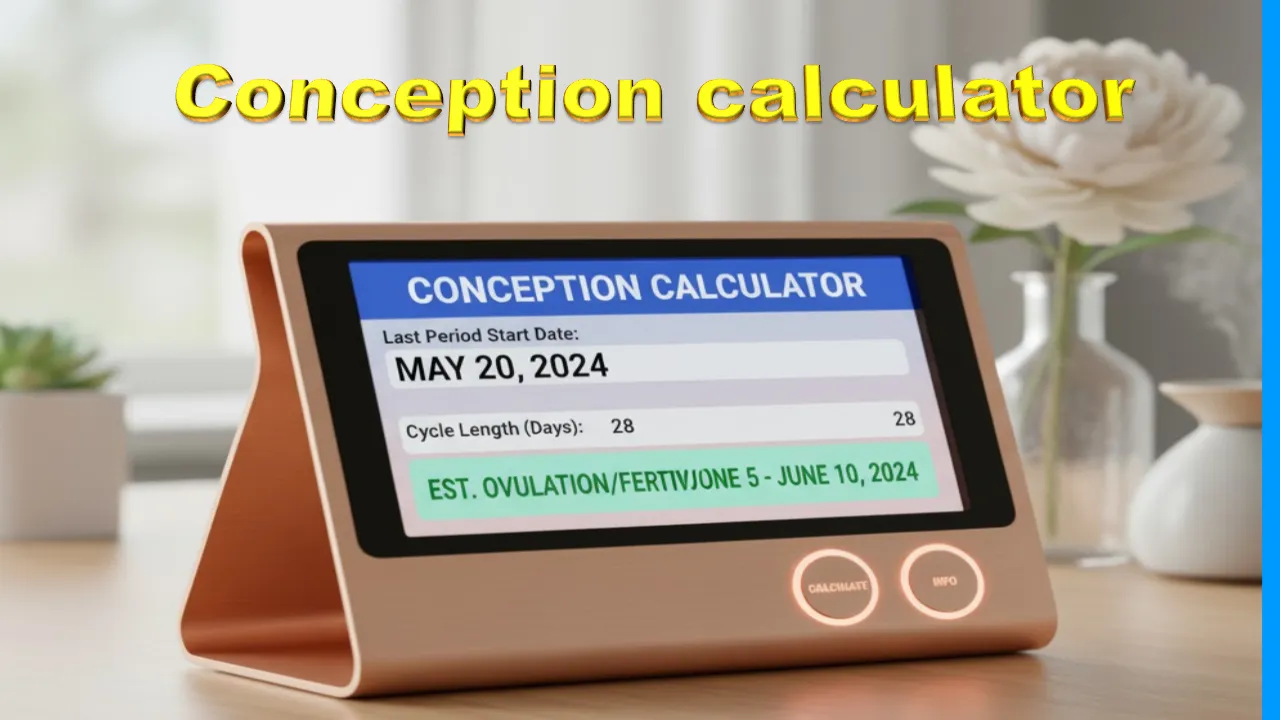
A conception calculator uses two primary inputs:
- 1️⃣ The First Day of Your Last Menstrual Period (LMP)
- 2️⃣ Average Length of Your Menstrual Cycle (typically 28 days)
Using these details, the calculator estimates:
- Ovulation date
- Fertile window (most likely days to conceive)
- Conception date
- Due date (EDD)
Let’s break it down step by step.
🩸 Step 1: Enter the First Day of Your Last Period
This marks Day 1 of your menstrual cycle. The tool uses it as a baseline to calculate when ovulation likely occurs — usually around day 14 in a 28-day cycle.
🌻 Step 2: Enter Your Average Cycle Length
Most women have cycles lasting 26–32 days, though this can vary. A shorter or longer cycle affects the timing of ovulation, so accuracy here is crucial.
🌞 Step 3: Calculate Ovulation and Fertile Days
The calculator uses your input to predict:
- Ovulation Day: When an egg is released (typically 14 days before your next period).
- Fertile Window: The 5 days leading up to ovulation plus the day of ovulation — the best time to try for a baby.
👶 Step 4: Estimate Conception and Due Date
Once ovulation and fertilization occur, the calculator can estimate:
- Conception Date (when the sperm meets the egg)
- Estimated Due Date (EDD) — approximately 280 days from your LMP
🌹The Science Behind the Conception Calculator
The conception calculator relies on basic biological and reproductive science. Every menstrual cycle consists of key phases:
- Menstrual Phase (Days 1–5) – Bleeding begins as the uterus sheds its lining.
- Follicular Phase (Days 1–13) – The egg matures in the ovary.
- Ovulation Phase (Day 14 in a 28-day cycle) – The egg is released.
- Luteal Phase (Days 15–28) – The uterus prepares for possible implantation.
If fertilization occurs during ovulation, conception happens — marking the start of pregnancy.
🌼Factors That Affect Conception Calculation Accuracy
Even the most advanced calculators rely on average biological assumptions. Several factors can affect accuracy:
- Irregular Periods: Harder to predict ovulation accurately.
- Stress and Lifestyle: Can delay or speed up ovulation.
- Hormonal Imbalances: Such as PCOS or thyroid disorders.
- Birth Control Transition: May disrupt cycle regularity for several months.
- Breastfeeding: Can suppress ovulation temporarily.
For precise fertility tracking, use basal body temperature (BBT) charts, ovulation test kits (LH tests), or consult a gynecologist.
🌺 How to Use a Conception Calculator for Pregnancy Planning Here’s a simple way to make the most of your calculator results:
🩵 Track Your Menstrual Cycle Regularly
Note down the start and end dates of your period for at least three months to determine your average cycle length.
🩷 Identify Your Fertile Window
Use the calculator to pinpoint your 6 most fertile days. Have intercourse every other day during this window for best results.
💜 Maintain a Healthy Lifestyle
Eat balanced meals, exercise moderately, reduce stress, and avoid alcohol and smoking to enhance fertility naturally.
💛 Combine With Ovulation Kits
Use an ovulation predictor kit (OPK) to confirm when you’re ovulating. This, paired with the calculator, offers better accuracy.
💐 Using the Conception Calculator for Pregnancy TrackingEven after conceiving, you can continue using the calculator to track:
- How many weeks pregnant you are
- Your estimated due date
- Milestones like trimester changes and fetal development
For example:
If your last menstrual period was on August 1st, your due date is around May 8th, and you’re about 12 weeks pregnant in late October.
🌻 Common Mistakes to Avoid When Using a Conception Calculator
- ❌ Using an Incorrect Cycle Length – Entering wrong data affects results.
- ❌ Ignoring Irregular Cycles – Irregular periods require medical tracking for accuracy.
- ❌ Relying Solely on the Calculator – Use it alongside professional guidance or ovulation kits.
- ❌ Misinterpreting the Results – The tool provides estimates, not absolute answers.
- ❌ Overlooking Health Factors – Conditions like PCOS, thyroid disorders, or obesity may delay ovulation.
💬FAQs About the Conception Calculator
🤰 H3: What is a Conception Calculator?
A conception calculator estimates when you likely conceived and your baby’s expected due date based on your last menstrual period and average cycle length.
💡How Accurate Is a Conception Calculator?
It’s generally 85–95% accurate for women with regular cycles. For irregular periods, results may vary and should be used as a guide, not a guarantee.
🩸Can I Use a Conception Calculator to Avoid Pregnancy?
Yes, but with caution. While it helps identify your fertile window, it’s not 100% reliable as birth control. Combine it with other contraceptive methods for safety.
🧠Is a Conception Calculator the Same as an Ovulation Calculator?
They are closely related.
- A conception calculator estimates when conception happened.
- An ovulation calculator identifies when ovulation is likely to occur — the best time to conceive.
🍼 Can I Use a Conception Calculator if My Periods Are Irregular?
Yes, but it’s less precise. For irregular cycles, consider tracking ovulation with basal body temperature, cervical mucus, or ovulation test strips for more accurate results.
🌼Additional Related Tools You Can Use
To enhance your pregnancy tracking, try:
- Pregnancy Week Calculator – Find out what week you’re in and fetal development stages.
- Due Date Calculator – Estimate delivery date.
- Ovulation Calculator – Pinpoint fertile days.
- Menstrual Cycle Tracker – Monitor patterns for health awareness.
These tools often come bundled on women’s health websites and apps for easy use.
💖 Tips to Increase Your Chances of Conception
- Time Intercourse Wisely: Every other day during fertile days.
- Maintain a Healthy Weight: Both underweight and overweight women may face ovulation issues.
- Eat Fertility-Boosting Foods: Include folic acid, zinc, and omega-3s.
- Reduce Stress: Chronic stress can delay ovulation.
- Quit Smoking and Alcohol: Both harm reproductive health and fetal development.
- Track Ovulation Symptoms: Like mild cramps, clear mucus, or increased libido.
🌸 Conception Calculator and IVF (In Vitro Fertilization)
For couples undergoing IVF or IUI, a conception calculator can:
- Help estimate egg retrieval and implantation timing
- Track embryo transfer days
- Determine pregnancy weeks after a successful procedure
However, consult your fertility specialist for medical accuracy.
💬 Expert Advice for Using a Conception Calculator
Use it early in your pregnancy journey to plan or prevent conception.
- Pair it with medical advice for conditions affecting ovulation.
- Always double-check results with an ovulation test or ultrasound when pregnant.
A conception calculator works best as a supporting guide, not a diagnostic tool.
🌺 ConclusionA Conception Calculator is more than just a digital tool — it’s your personal reproductive guide. Whether you’re planning for a baby, tracking your pregnancy progress, or simply learning about your body, it offers valuable insights.
By understanding your fertile window, ovulation period, and due date, you empower yourself to make informed health and family planning decisions.
✨ Pro Tip: Use your conception calculator regularly, keep track of your menstrual data, and combine it with healthy lifestyle habits for the best results.
Start today — take control of your fertility journey and plan your future with confidence!
🧾Key Takeaways
- Conception calculators estimate your fertile window, ovulation date, and due date.
- They work best for women with regular cycles.
- Combine with ovulation kits or BBT tracking for accuracy.
- Ideal for both pregnancy planning and pregnancy tracking.
- Always seek medical confirmation for conception or due date estimation.


Wow, I learned something new today. Thanks!