
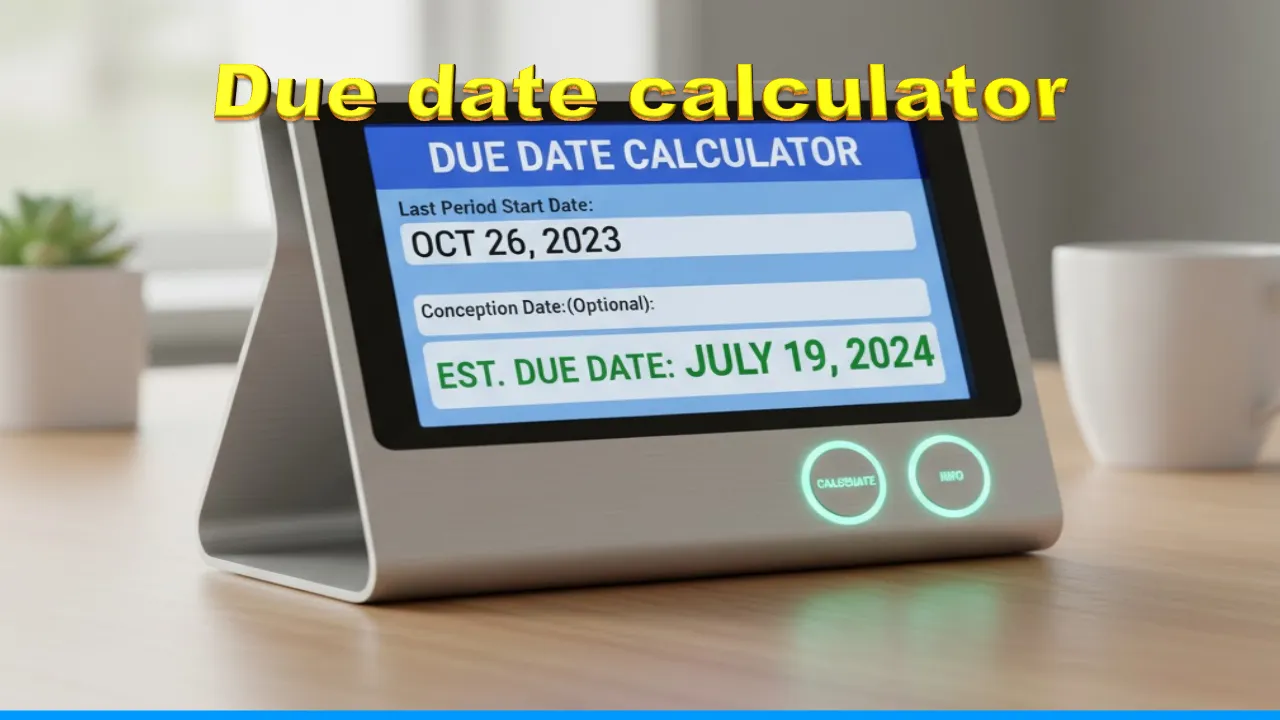
Due date calculator
Due date calculator Calculate your estimated due date based on the first day of your last menstrual period or conception date
Due Date Calculator
Calculate your estimated due date based on the first day of your last menstrual period or conception date
Your Estimated Due Date
You are currently approximately 0 weeks and 0 days pregnant
This calculator provides an estimate of your due date based on standard pregnancy calculations. It is not a substitute for professional medical advice. Always consult with your healthcare provider for accurate pregnancy dating and prenatal care.
Due Date Calculator: Your Complete Guide to Estimating Your Baby's Arrival
Discover how to calculate your due date accurately with our comprehensive guide. Learn about different calculation methods, pregnancy milestones, and get expert tips for a healthy pregnancy journey.
When you first see that positive pregnancy test, one of the most exciting questions is: "When will my baby arrive?" A pregnancy due date calculator helps answer this crucial question, providing expecting parents with an estimated timeline for their baby's arrival. Understanding your due date isn't just about planning the nursery or scheduling maternity leave—it's about tracking your baby's development and ensuring proper prenatal care throughout your pregnancy journey.
In this comprehensive guide, we'll explore everything you need to know about due date calculators, from the science behind them to how to use them effectively. Whether you're a first-time parent or expanding your family, this article will provide valuable insights to help you navigate your pregnancy with confidence and clarity.
What is a Due Date Calculator?
A pregnancy due date calculator is a tool that estimates when your baby is likely to be born based on specific information about your menstrual cycle or conception date. These calculators use established medical principles to project your estimated due date (EDD), which healthcare providers use to monitor your pregnancy's progress and your baby's development.
The Science Behind Due Date Calculations
The most common method for calculating due dates is Naegele's Rule, developed by German obstetrician Franz Karl Naegele in the early 19th century. This rule assumes a 28-day menstrual cycle with ovulation occurring on day 14. According to this method, pregnancy typically lasts 280 days (40 weeks) from the first day of your last menstrual period (LMP).
It's important to understand that only about 5% of babies are born exactly on their due date. Most births occur within two weeks before or after the estimated due date, making it more of an estimated timeframe than an exact expiration date for your pregnancy.
Why Accurate Due Date Calculation Matters
Knowing your estimated due date is crucial for several reasons beyond simply satisfying your curiosity about when you'll meet your baby. Your EDD serves as a roadmap for your entire pregnancy journey, helping healthcare providers make important decisions about your care and your baby's health.
Monitoring Fetal Development
Throughout pregnancy, specific developmental milestones should occur at certain times. Your healthcare provider uses your due date to track whether your baby is growing appropriately for their gestational age. This monitoring helps identify potential issues early, allowing for timely interventions if necessary.
Scheduling Prenatal Tests from Due date calculator
Many important prenatal tests must be performed during specific windows of pregnancy for accurate results. For example:
- First trimester screening typically occurs between 11-14 weeks
- Anatomy ultrasound is usually performed between 18-22 weeks
- Glucose screening for gestational diabetes happens around 24-28 weeks
Without an accurate due date, you might miss these critical testing windows or receive inaccurate results.
Making Important Preparations
Your due date helps you plan for maternity leave, arrange for childcare for older children, and ensure you have everything ready for your baby's arrival. While babies often have their own schedules, having an estimated timeframe allows for better preparation.
Different Methods for Calculating Your Due Date
Several methods can help determine your estimated due date, each with varying levels of accuracy depending on your circumstances.
Last Menstrual Period (LMP) Method of Due date calculator
The LMP method is the most commonly used approach for estimating due dates. To calculate using this method:
- Note the first day of your last menstrual period
- Add seven days
- Subtract three months
- Add one year
For example, if your LMP was April 10, 2023:
- Add 7 days: April 17
- Subtract 3 months: January 17
- Add 1 year: January 17, 2024
This calculation gives you an estimated due date of January 17, 2024.
Conception Date Method of Due date calculator
If you know your exact conception date, you can calculate your due date by adding 266 days (38 weeks) to that date. This method is more accurate than the LMP method but requires knowing when conception occurred, which isn't always possible unless you've been tracking ovulation closely.
IVF Transfer Date Method of Due date calculator
For pregnancies achieved through in vitro fertilization (IVF), the calculation differs based on the type of embryo transferred:
- For day 5 embryo transfers: Add 266 days to the transfer date
- For day 3 embryo transfers: Add 268 days to the transfer date
This method provides the most accurate due date for IVF pregnancies since the conception date is precisely known.
Ultrasound Dating Due date calculator
Ultrasound measurements, particularly during the first trimester, provide highly accurate due date estimates. In early pregnancy, babies develop at a remarkably consistent rate, allowing sonographers to measure the crown-rump length (CRL) and determine gestational age within 3-5 days.
As pregnancy progresses, ultrasound dating becomes less accurate, which is why first-trimester ultrasounds are preferred for establishing or confirming due dates.
How to Use a Due Date Calculator Effectively
Online due date calculators are convenient tools, but using them correctly ensures you get the most accurate estimate possible.
Gather Accurate Information, Due date calculator
Before using a calculator, collect the following information:
- The first day of your last menstrual period (be certain it's the first day, not the last)
- Your average cycle length (if it differs from 28 days)
- Any known information about conception dates or ovulation
Choose the Right Calculator
Select a calculator that allows you to input your specific cycle length rather than assuming a standard 28-day cycle. This adjustment is crucial for women with longer or shorter menstrual cycles.
Understand the Limitations
Remember that due date calculators provide estimates, not guarantees. Your healthcare provider may adjust your due date based on ultrasound measurements or other clinical factors.
Factors That Can Affect Due Date Accuracy
Several factors can influence the accuracy of your estimated due date, which explains why so few babies arrive exactly on their due dates.
Irregular Menstrual Cycles
Women with irregular periods may find LMP-based due date calculations less accurate. If your cycles vary significantly in length, an early ultrasound provides a more reliable due date estimate.
Variations in Cycle Length
The standard due date calculation assumes a 28-day cycle with ovulation on day 14. If you have a longer or shorter cycle, or if you ovulate earlier or later in your cycle, your actual due date may differ from the calculated one.
Inaccurate Recall of LMP
Remembering the exact date your last period started can be challenging, especially if you weren't actively trying to conceive. Even a few days' difference in your LMP can change your due date by several days.
What If Your Due Date Changes?
It's common for healthcare providers to adjust due dates based on ultrasound findings, particularly if there's a significant discrepancy between the LMP-based due date and ultrasound measurements.
When Providers Change Due Dates
Your provider might adjust your due date if:
- The first-trimester ultrasound measurement differs by more than 5-7 days from your LMP-based due date
- You have uncertain LMP dates
- There's a significant size discrepancy in later ultrasounds
How to Handle a Changed Due Date
If your provider changes your due date, try to embrace the new date while understanding that it's still an estimate. Update your planning accordingly, but remain flexible since babies ultimately decide their own birth dates.
Tracking Pregnancy Progress By Week
Once you have your estimated due date, you can track your pregnancy progress week by week, understanding what developmental milestones to expect for both you and your baby.
First Trimester (Weeks 1-13)
The first trimester is a period of rapid development where your baby grows from a fertilized egg to a fetus with recognizable human features. During this time, you might experience morning sickness, fatigue, and other early pregnancy symptoms.
Second Trimester (Weeks 14-27)
Many women find the second trimester more comfortable as early pregnancy symptoms often subside. This period brings noticeable changes like feeling your baby move and showing a prominent baby bump.
Third Trimester (Weeks 28-40+)
During the final trimester, your baby puts on weight and prepares for life outside the womb. You might experience more discomfort as your body makes its final preparations for birth.
Common Due Date Calculation Mistakes to Avoid
Accurate due date calculation requires attention to detail. Avoid these common mistakes for a more reliable estimate:
Using the Wrong Start Date
Remember to use the first day of your last period, not the last day. This distinction is crucial for accurate calculation.
Ignoring Cycle Length Variations
If your menstrual cycle is consistently longer or shorter than 28 days, use a calculator that accounts for this variation or adjust the calculation accordingly.
Relying Solely on Apps or Online Calculators
While convenient, digital calculators shouldn't replace professional medical advice. Always confirm your due date with your healthcare provider.
Special Considerations in Due Date Calculation
Certain circumstances require adjustments to standard due date calculations.
Multiple Pregnancies
While twins or triplets typically develop at the same rate as singletons early in pregnancy, they often arrive earlier. Your provider will monitor your pregnancy closely and may adjust your expected delivery timeframe accordingly.
Medical Conditions
Conditions like gestational diabetes or preeclampsia might influence when your provider recommends delivery, potentially changing your expected birth timeframe.
Previous Pregnancy History
If you've had previous pregnancies that ended significantly before or after your due date, your provider might consider this history when managing your current pregnancy.
Beyond the Due Date: What Happens If You Go Past Your EDD?
Approximately 30% of pregnancies continue beyond 40 weeks, which can be frustrating for eager parents. Understanding what to expect can help you navigate this period more comfortably.
Monitoring After 40 Weeks
If your pregnancy continues beyond your due date, your provider will likely increase monitoring to ensure your baby remains healthy. This might include non-stress tests, biophysical profiles, and checking amniotic fluid levels.
Induction Considerations
Many providers discuss induction between 41-42 weeks to reduce risks associated with post-term pregnancy, such as placental insufficiency or meconium aspiration.
Frequently Asked Questions About Due Date Calculators
How Accurate Are Due Date Calculators?
Due date calculators provide reliable estimates, but they're not perfect. Only about 5% of babies are born exactly on their due date, while most arrive within two weeks before or after the estimated date. First-trimester ultrasound dating is typically accurate within 3-5 days, making it the gold standard for establishing due dates.
Can My Due Date Change After the First Ultrasound?
Yes, it's common for healthcare providers to adjust due dates based on first-trimester ultrasound measurements, especially if there's more than a 5-7 day difference between the ultrasound dating and your LMP-based due date. Early ultrasounds (before 14 weeks) provide the most accurate fetal measurements for dating purposes.
What If I Don't Know My Last Menstrual Period Date?
If you're unsure about your LMP, don't worry. Your healthcare provider can estimate your due date using an early ultrasound. First-trimester ultrasounds measure the crown-rump length of the embryo, which correlates strongly with gestational age and provides an accurate due date estimate.
Does a Longer Menstrual Cycle Affect My Due Date?
Yes, women with longer menstrual cycles typically ovulate later in their cycle, which means the standard LMP calculation (which assumes ovulation on day 14) may not be accurate. If you have consistent longer cycles, you can adjust your due date by adding the difference between your cycle length and 28 days to the standard calculation.
Why Do So Few Babies Arrive Exactly on Their Due Date?
Due dates are estimates based on population averages, but every pregnancy is unique. Factors like genetic predisposition, maternal age, whether it's your first baby, and minor variations in embryonic development all contribute to the natural variation in gestation length. The "due month" (37-42 weeks) is a more realistic timeframe to expect delivery.
Can I Calculate My Due Date If I Have Irregular Periods?
Yes, but LMP-based calculations will be less reliable with irregular periods. In this case, an early ultrasound provides the most accurate due date. If you've been tracking ovulation, you can calculate from your ovulation date plus 266 days (38 weeks) for a more precise estimate.
Conclusion: Embracing the Journey With Your Due Date Calculator
Your estimated due date marks an exciting milestone in your pregnancy journey—the anticipated meeting with your newborn. While due date calculators provide valuable estimates, remember that they're guides rather than guarantees. The typical 40-week pregnancy timeline offers a framework for understanding fetal development and planning prenatal care, but your baby will ultimately decide their birthday.
Use your due date as a tool for preparation and anticipation, but remain flexible as your pregnancy progresses. Track your symptoms, attend all prenatal appointments, and maintain open communication with your healthcare provider about any concerns. Whether your baby arrives exactly on schedule, fashionably early, or takes their time making an entrance, the final result—meeting your little one—makes the journey worthwhile.
Ready to calculate your due date? Use our accurate due date calculator above and share your experience in the comments below. Don't forget to bookmark this page for future reference throughout your pregnancy journey!
| # 🌟 Summary Pregnancy Calculators tools | |
| Category | Purpose |
| Pregnancy Calculators | Track pregnancy weeks, months, and milestones |
| Due Date & Delivery Calculators | Estimate EDD and delivery timelines |
| Conception & Gestation Calculators | Find conception and gestational age |
| Ovulation & Fertility Calculators | Identify fertile windows and ovulation dates |
| Menstrual & Period Calculators | Predict and track menstrual cycles |
| Safe Days & Fertility Protection | Calculate non-fertile (safe) days |
| Implantation & Pregnancy Testing Tools | Estimate implantation and test accuracy |
| Hostinger Web hosting | |
